
YXYSteel information
Ship Plate Surface Preparation — Blasting & Priming
Ship plate prepared on a 5.2 m × 24 m line at Rongyu Warehouse: shot blasting and priming in one pass, Sa2.5 or better, with roughness, salt and dry-film thickness measured — not estimated.
The first process, not the last
Shipbuilding sets unusually tight requirements on surface cleanliness, roughness and corrosion performance. Plate that is cut, welded and painted without standardised preparation loses coating adhesion — and that shows up later as coating failure, a shorter hull life and, in the worst case, a class inspection finding.
That is why preparation sits at the front of the route, on plate that is still flat and stacked, before profiling and welding put heat and handling marks into it.
Where the line sits
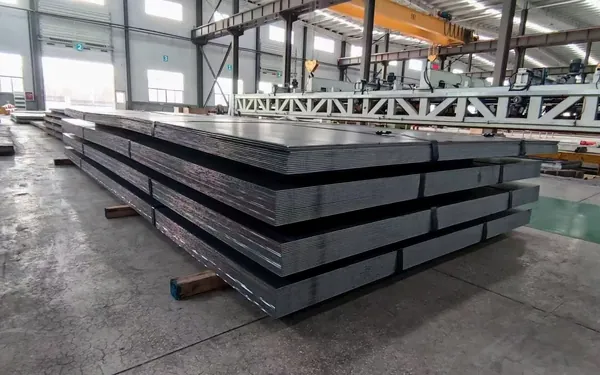
Backed by Shandong Steel’s production capacity, we operate a dedicated processing and warehousing base — Rongyu Warehouse — inside the Shandong Steel Supporting Industrial Park. Plate comes in from the mill, is prepared and stored under cover, and leaves for cutting or export without changing hands in between.
What the line handles
The pre-processing line takes ordinary ship plate in grades A, B, C and D, and high-strength shipbuilding plate including AH32, AH36, DH32, DH36 and EH36.
| Parameter | Range |
|---|---|
| Plate width | up to 5.2 m |
| Plate thickness | 5–120 mm |
| Line length | 24 m |
| Grades | A / B / C / D · AH32 AH36 · DH32 DH36 · EH36 |
| Standards | CCS · ABS · DNV · LR (IACS) |
Shot blasting and priming in one pass
Blast and primer are handled as one integrated standard rather than two separate jobs. The blasting section brings the surface to Sa2.5 or better; the coating section applies weldable shop primer and passes the plate through a fully automatic spray booth and drying system, which is where coating thickness is actually controlled.
Because the plate is blasted and primed without a gap in between, there is no window for flash rust to form between the two steps — the usual reason a primer fails to bond.
Quality control
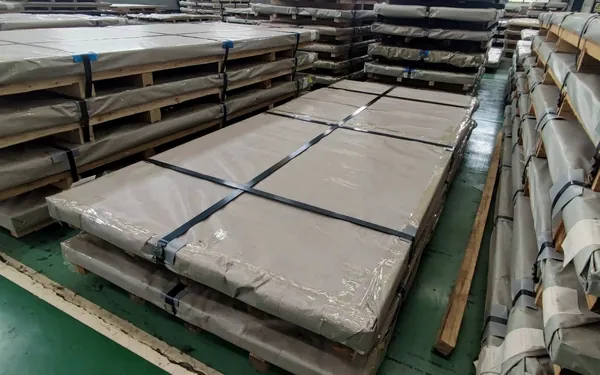
Three measurements decide whether a plate passes: roughness, cleanliness and salt content — all checked automatically on the line. Coating thickness is checked dry, with professional DFT gauges covering 0–1500 μm, so the anti-corrosion performance meets the specification rather than the operator’s judgement.
- Sa2.5 or above — surface grade verified on the line
- Roughness, cleanliness, salt — automatic testing
- DFT 0–1500 μm — dry film thickness measured and recorded
- Drying — automatic booth and drying system for thickness control
Classification society standards
The line is set up to the requirements of the major IACS societies — CCS, ABS, DNV and LR. Tell us which society the vessel is classed under at enquiry stage and the preparation record is issued against that standard.
Questions we get before the PO
Can you prepare plate that we supply?
Yes. We prepare customer-supplied plate as well as plate bought through us; the grade and heat number are recorded on receipt and carried through to the certificate.
What thickness primer do you apply?
Shop primer is applied to the coating specification for the project and checked with a DFT gauge over the 0–1500 μm range.
Does priming affect welding?
Weldable shop primer is designed to be welded through at the joint. Where the WPS requires bare metal, the primer is removed 50 mm either side before welding.
Can preparation and cutting be one order?
Yes — prepared plate goes straight to our profiling line, so the primer is on the plate before the parts are cut and the cut edges stay clean.
Need a plate solution?
Cut, machined, welded and surface-prepared under one roof in Rizhao.