YXYSteel information
Steel Plate Cutting — Flame, Plasma & Laser
Wear-resistant, shipbuilding and pressure-vessel plate cut by flame, plasma and a 20 kW fibre laser — from 6 mm to 300 mm, nested on the same drawing we machine and weld to.
Flame, Plasma and Laser Cutting on One Nest
Hot cutting is the standard route for wear-resistant plate: flame for thickness, plasma for speed, laser for edge quality. The right choice depends on grade, thickness, the tolerance the part needs and what happens to it afterwards — a plasma-cut edge that will be welded does not need the same finish as a liner that bolts straight onto a bucket.
Every nest is cut from the same drawing that goes to drilling and welding, so the hole pattern, the bevel and the weld prep refer to one datum instead of three.
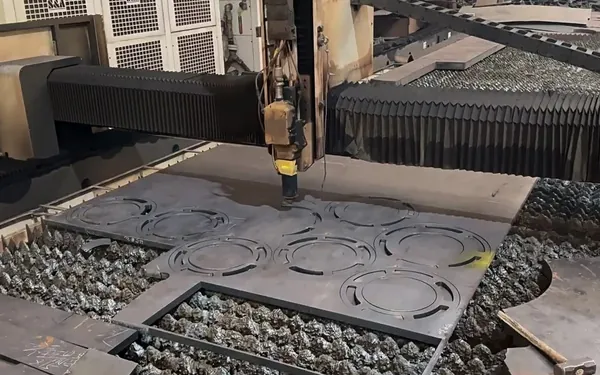
Flame, Plasma and Laser: How They Compare
The numbers below are working ranges for wear-resistant plate. They move with grade, gas supply and machine condition — the table is a starting point for quoting, not a guarantee.
| Method | Speed (mm/min) | Kerf (mm) | HAZ (mm) | Tolerance |
|---|---|---|---|---|
| Flame | 150–700 | 2–5 | 4–10 | ±2.0 |
| Plasma | 1,200–6,000 | 2–4 | 2–5 | ±1.0 |
| Laser | 600–2,200 | ≤1 | 0.4–3 | ±0.2 |
Typical starting parameters; final values confirmed against grade, thickness and drawing.
Preventing cracks on wear plate
The thicker and harder the plate, the more a cut edge wants to crack. Preheating is the most effective countermeasure; slow cutting helps a little, slow cooling helps more.
- Preheat the cut area evenly before the torch arrives — flame or electric blanket, no local hot spots.
- Cut slower rather than forcing the speed; a cold, fast cut is where cracks start.
- Cool slowly — stack cut parts while still warm and cover them, so the edge does not quench in the shop draught.
- Below 5 °C shop temperature with plate over 20 mm, preheat first, whatever the grade.
| Grade | Thickness (mm) | Preheat (°C) |
|---|---|---|
| NM400 | 40–60 | 100–200 |
| NM450 | 40–50 | 100–200 |
| NM500 | 30–50 | 100–200 |
Cut-Edge Softening and How to Avoid It
Any thermal cut leaves a softened band within roughly 200 mm of the edge. For most wear parts it is irrelevant; for a liner that runs against abrasive rock it is the first place to wear through.
Where the edge has to keep its hardness, we change the process rather than the plate:
- Underwater plasma or laser — the water quenches the cut zone and keeps the softened band narrow.
- Water jet — cold cutting, kerf 0.8–1.2 mm, no heat-affected zone at all, no softening.
- Wire EDM — slow, but the smallest softening footprint and the tightest profile accuracy.
Shearing below 10 mm
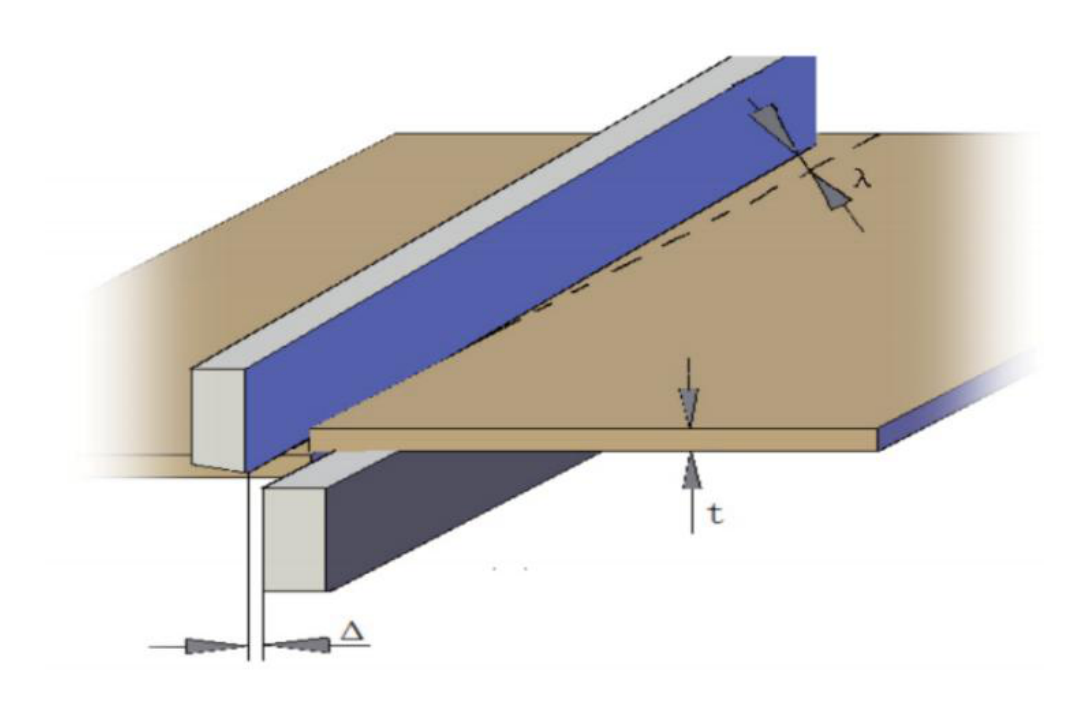
Under 10 mm the plate is usually sheared, not burned: faster, no heat-affected zone, no softening. The edge quality is decided by two things — the clearance between the blades and the rake angle of the moving blade. Both have to grow as the plate gets harder, otherwise the cut edge rolls over and the plate twists.
We shear up to 10 mm in NM360–NM500; above that the edge quality drops faster than the cut gets cheaper, so the plate moves to plasma or laser.
Bevels, Profiles and Nesting
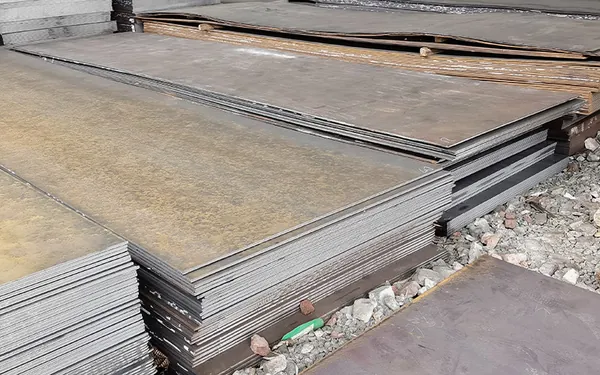
Single-V, double-V and K-preps are milled after cutting, so the bevel angle and the root face are cut to the WPS instead of to the torch. Profiles, slots, lifting lugs and bolt patterns are nested to keep yield up and the number of setups down.
Steel Plate Cutting FAQ
What is the thickest plate you cut?
Up to 300 mm by flame; plasma is the practical route from 6 to about 50 mm, laser from 6 mm to around 25 mm depending on grade.
Can you cut from our DXF instead of a PDF?
Yes, and it is cheaper for both sides. DXF/DWG keeps the kerf compensation and the hole callouts intact; a PDF usually means we redraw and quote the redraw.
Do you cut NM400 and NM500 the same way?
No. NM500 gets a preheat from 30 mm and a slower torch; the cut-edge hardness requirement decides whether we go underwater or switch to water jet.
Can cutting, drilling and welding be one order?
That is the point of the plant. One drawing, one tolerance stack, one certificate — the part arrives at your line ready to fit rather than ready for another supplier.
Need a plate solution?
Cut, machined, welded and surface-prepared under one roof in Rizhao.